Is It Good to Meal Prep? What the Research Says
Meal planning is linked with more varied, higher-quality eating. The catch is safe storage, so plan the back half of the week for the freezer.
 Orbit Editorial·5 min read··3 sources
Photo by RDNE Stock project on Pexels
- Meal planning was linked with more varied, guideline-aligned eating in a study of 40,554 French adults.
- Households cooking dinner 6–7 times a week ate less sugar (119 g vs 135 g a day) and less fat than rare cookers.
- For a five-day prep, fridge the first few days and freeze the rest; cooked food keeps days, not a full week.
- The CDC says refrigerate cooked food within 2 hours and reheat leftovers to 165°F (74°C).
Is it good to meal prep? The research suggests yes, with one practical catch. In large studies, people who plan their meals ahead and cook at home tended to eat a more varied diet with less sugar and fat than people who rarely did. The catch is storage: cooked food only keeps well in the fridge for a limited time, so a good prep is planned around the freezer as much as the pan.
Here is what the studies found, how to make a prep that you will still want to eat on Thursday, and the food-safety basics that make a batch cook safe.
What the research says about planning and cooking ahead
The largest study on meal planning comes from France. Researchers asked 40,554 adults in the NutriNet-Santé study whether they planned the foods they would eat over the next few days, then compared that with repeated 24-hour food records. About 57% said they planned meals at least occasionally. Planners were more likely to score in the top quarter for following national nutrition guidelines, and more likely to eat a wide variety of foods. The study was cross-sectional, so it shows a link, not cause and effect: people who plan may differ in other ways too. But the direction was consistent.
A US study using national survey data from more than 9,500 adults looked at cooking itself. People in households that cooked dinner six or seven times a week ate less sugar (119 g against 135 g a day), less fat, and fewer total calories than people in households that cooked dinner once a week or not at all. Again, a link rather than proof, but it fits a common-sense picture: food you made yourself is food you chose.
Meal prep is the bridge between those two findings. It turns a plan into cooked food that is already there when you are tired, which is exactly the moment takeaway wins.
Why it tends to work in real life
Most eating decisions happen when energy is lowest: late afternoon, after work, after the kids are in bed. A prepared meal removes three decisions at once (what to eat, whether to shop, whether to cook). The research on habits in general points the same way: the fewer steps between you and a behaviour, the more often it happens.
It also helps with the basics that are easy to miss. If you build each box around a protein, a vegetable or two and a grain or starch, you cover most of what a balanced plate needs without counting anything. For how much protein that might mean for you, see our guide on how much protein you need a day.
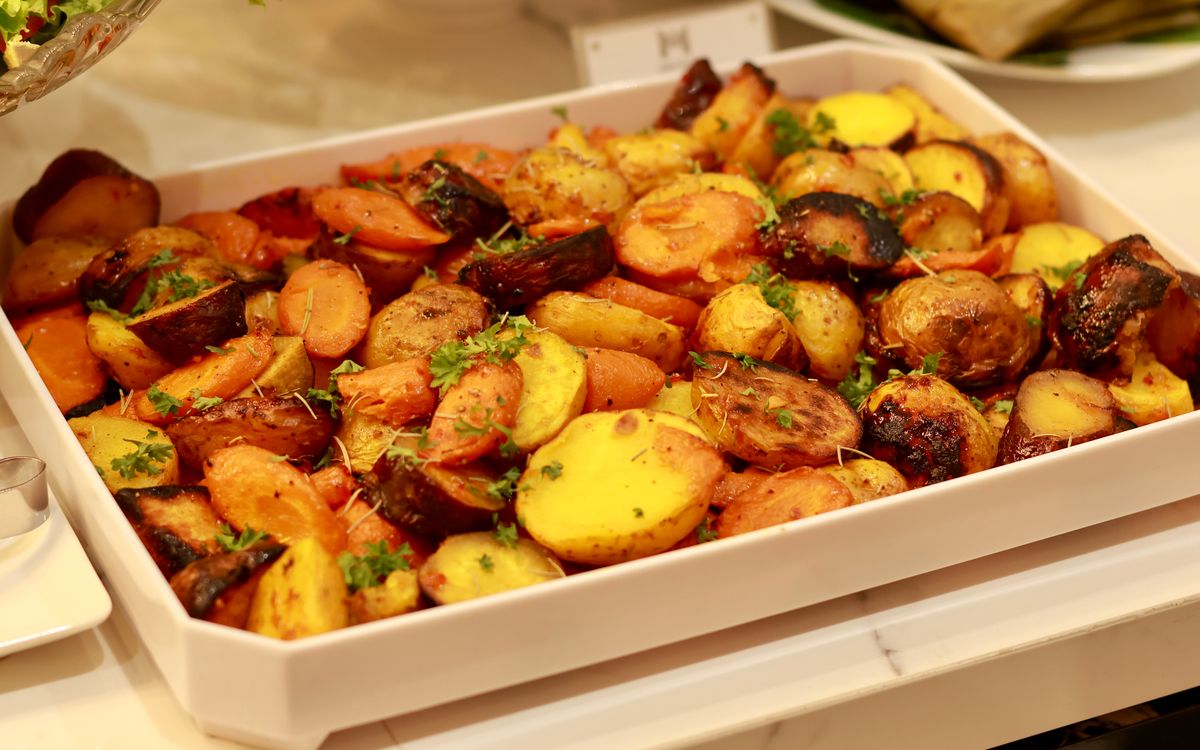
Photo by 🇻🇳🇻🇳Nguyễn Tiến Thịnh 🇻🇳🇻🇳 on Pexels
Is it ok to meal prep for five days?
This is the question most people actually type, and the honest answer is: plan it, but not all in the fridge. Most national food-safety agencies give cooked leftovers a shelf life of a few days in the fridge rather than a full working week, and the exact number depends on the food. Check the guidance where you live.
The simple way around it:
- Fridge the first half, freeze the second. Cook on Sunday, keep Monday to Wednesday in the fridge, and freeze Thursday and Friday. Move them to the fridge the night before.
- Prep components, not only finished meals. Cooked grains, roasted vegetables, a pot of beans and a sauce combine differently each day, which also solves the "same box five times" boredom.
- Keep the freshest things separate. Salad leaves, herbs, avocado and dressings last better added on the day.
The food-safety basics that make batch cooking safe
The US Centers for Disease Control and Prevention sets out a few rules that matter most for anyone cooking in bulk:
- Refrigerate cooked leftovers within 2 hours. If the food has been somewhere above 90°F (32°C), such as a hot car, within 1 hour. Large pots cool slowly, so split them into shallow containers.
- Keep the fridge at 40°F (4°C) or below and the freezer at 0°F (-18°C) or below. A cheap fridge thermometer tells you whether yours actually is.
- Reheat leftovers to 165°F (74°C). Microwaves heat unevenly, so stir halfway and check the centre with a food thermometer if you have one.
None of this needs to be complicated. Cool, cover, label with the day, and eat in date order.
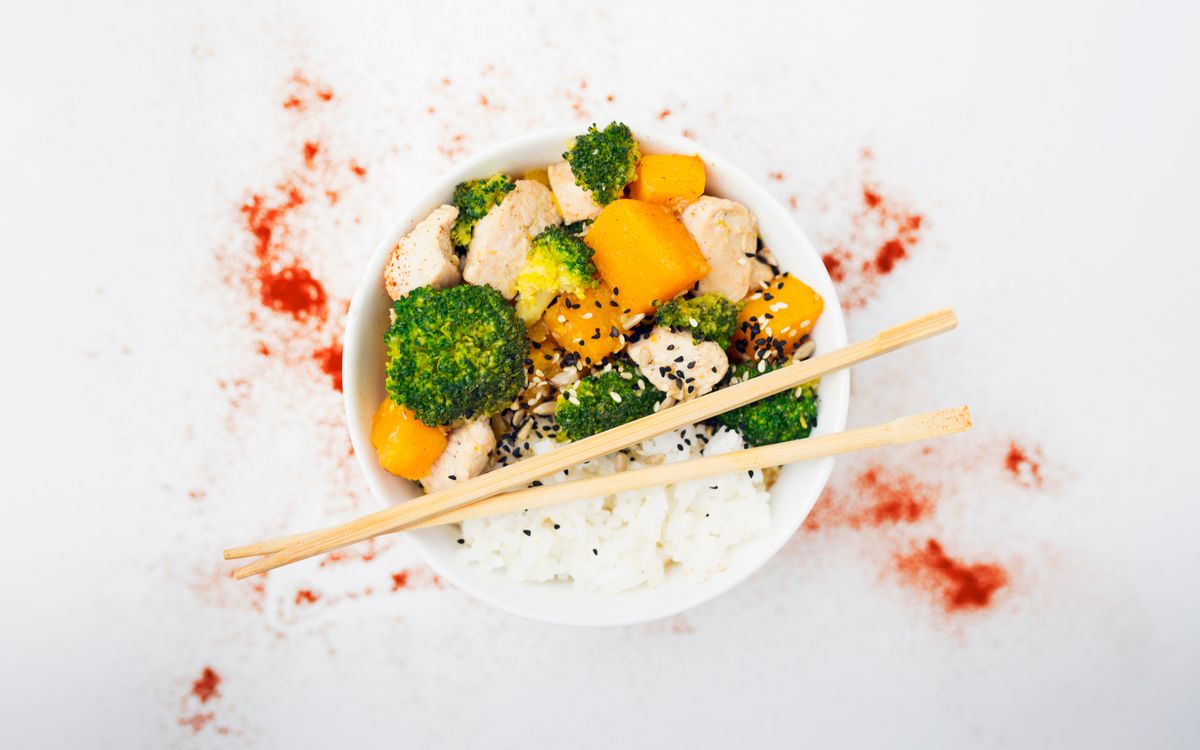
Photo by Piotr Arnoldes on Pexels
A simple first prep
If you have never done it, start small. Three lunches are easier to get right than fourteen meals.
- Pick one protein you already like: chicken thighs, a tray of tofu, lentils, eggs, or a tin of fish per box.
- Roast one tray of vegetables with oil and salt. Peppers, broccoli, carrots, onions and courgettes all hold up for a few days.
- Cook one grain or starch: rice, potatoes, pasta or quinoa.
- Make one sauce to change the taste each day: yoghurt and lemon, a peanut dressing, or a tomato sauce.
- Box three portions, fridge them, and see how Wednesday's tastes. Adjust from there.
Once three lunches feels easy, add a batch dinner, such as a chilli, soup or curry, and freeze half in single portions.
When you do not want to plan at all
Some weeks, the prep does not happen. That is fine; the goal is more home-cooked meals over a month, not a perfect Sunday every week. On those days, the useful question is what can be made from what is already in the kitchen.
That is where Orbit's coach, Orion, helps: tell it what is in your fridge and cupboard and it suggests a meal that fits your day, then logs it in a tap. It is a practical way to keep cooking at home without a plan on paper.
The short version
Meal prep is linked with more varied, better-quality eating, mostly because it makes home-cooked food the easy option. Keep the fridge portions to the first few days, freeze the rest, cool food within two hours, and reheat it until it is hot all the way through.
Questions people ask
Is meal prepping healthy?
The research suggests it tends to be. People who plan meals ahead and cook at home ate more varied diets with less sugar and fat in large studies, although those studies show a link rather than proof of cause.
Is it ok to meal prep for 5 days?
Plan five days, but keep only the first few in the fridge and freeze the rest. Most food-safety agencies give cooked leftovers a few days in the fridge, not a full week; check the guidance where you live.
How fast do I need to refrigerate meal prep?
The CDC says within 2 hours of cooking, or within 1 hour if the food has been somewhere above 90°F. Splitting large batches into shallow containers helps them cool quickly.
What temperature should I reheat meal prep to?
The CDC recommends reheating leftovers to 165°F (74°C). Stir microwaved food halfway through, since microwaves heat unevenly.
Sources
- Ducrot P et al. Meal planning is associated with food variety, diet quality and body weight status in a large sample of French adults. Int J Behav Nutr Phys Act, 2017
- Wolfson JA, Bleich SN. Is cooking at home associated with better diet quality or weight-loss intention? Public Health Nutr, 2015
- CDC: Four Steps to Food Safety
Keep reading
Is It OK to Take Vitamin D3 at Night? What Matters More
Night or morning makes little difference in the research. Taking vitamin D3 with a meal that has some fat in it, every day, matters far more.

What to Track on a Habit Tracker (and What to Leave Off)
Track a few small, specific actions tied to a cue you already have. Here is what the research on self-monitoring suggests belongs on the list.

Why Is My Weight Fluctuating by 5 Pounds? What's Normal
A swing of a few pounds in a day or two is mostly water, food still in transit and stored carbohydrate. Here is what moves it and how to read the trend.