How much protein do I need a day? The numbers, plainly
The baseline is 0.8 g per kilogram of body weight a day. Active people and older adults are often advised 1.2 to 2.0 g, spread across meals.
 Orbit Editorial·5 min read··3 sources
Photo by Vlada Karpovich on Pexels
- The RDA is 0.8 g of protein per kilogram of body weight a day: a floor for healthy adults at rest, not a target.
- Active people are often advised 1.4 to 2.0 g/kg (ISSN); older adults often aim around 1.0 to 1.2 g/kg.
- Spread it out: roughly 20 to 40 g per meal, every three to four hours.
- Whole foods first. Powder is a convenience, not a requirement.
- Kidney or liver conditions change the target: that number comes from your clinician.
Protein has become the one nutrient nobody argues against, which is why the advice around it has drifted so far from the evidence. Some of it says you need almost nothing; some of it says you need a shake after every meal. The research sits in a calmer middle, and the useful answer depends on three things: your body weight, how much you move, and your age.
The baseline number
The Recommended Dietary Allowance, set by the U.S. National Academies in their report on macronutrients, is 0.8 grams of protein per kilogram of body weight per day. In pounds, that is about 0.36 grams per pound. For a 70-kilogram adult it works out to 56 grams; for a 140-pound person, about 50.
The important detail, and the one most often lost, is what an RDA is. Harvard Health describes it as the minimum amount needed to keep from getting sick, not the amount you are supposed to eat. It was set to cover the needs of nearly all healthy adults at rest. It is a floor, not a target.
The same report sets an acceptable range for protein of 10 to 35 percent of daily calories. The average American already eats around 16 percent, so most adults in wealthy countries clear the floor without trying. The question for most people is not whether they get enough to avoid deficiency. It is whether they get enough for the life they are actually living.
When you probably need more
If you train. The International Society of Sports Nutrition, in its position stand on protein and exercise, puts the range for physically active people at 1.4 to 2.0 grams per kilogram per day. For the same 70-kilogram adult that is roughly 100 to 140 grams. The research behind it is mostly about building and keeping muscle alongside resistance training: protein and lifting together stimulate muscle building more than either alone. People eating in a calorie deficit while training hard sit at the top of that range or above it.
As you get older. Muscle becomes harder to build and keep with age, and a number of expert groups suggest older adults aim above the RDA, often in the region of 1.0 to 1.2 grams per kilogram, especially when they are active. The same logic applies: the floor was set for avoiding deficiency, not for holding on to strength across decades.
During pregnancy and breastfeeding. Needs rise. Harvard Health cites 75 to 100 grams a day during pregnancy. This is a conversation to have with the midwife or doctor who knows the pregnancy, not a number to set from an article.
If you have a medical condition affecting the kidneys or liver, protein targets are set by your clinician and can be lower, not higher. Ask before you raise your intake.
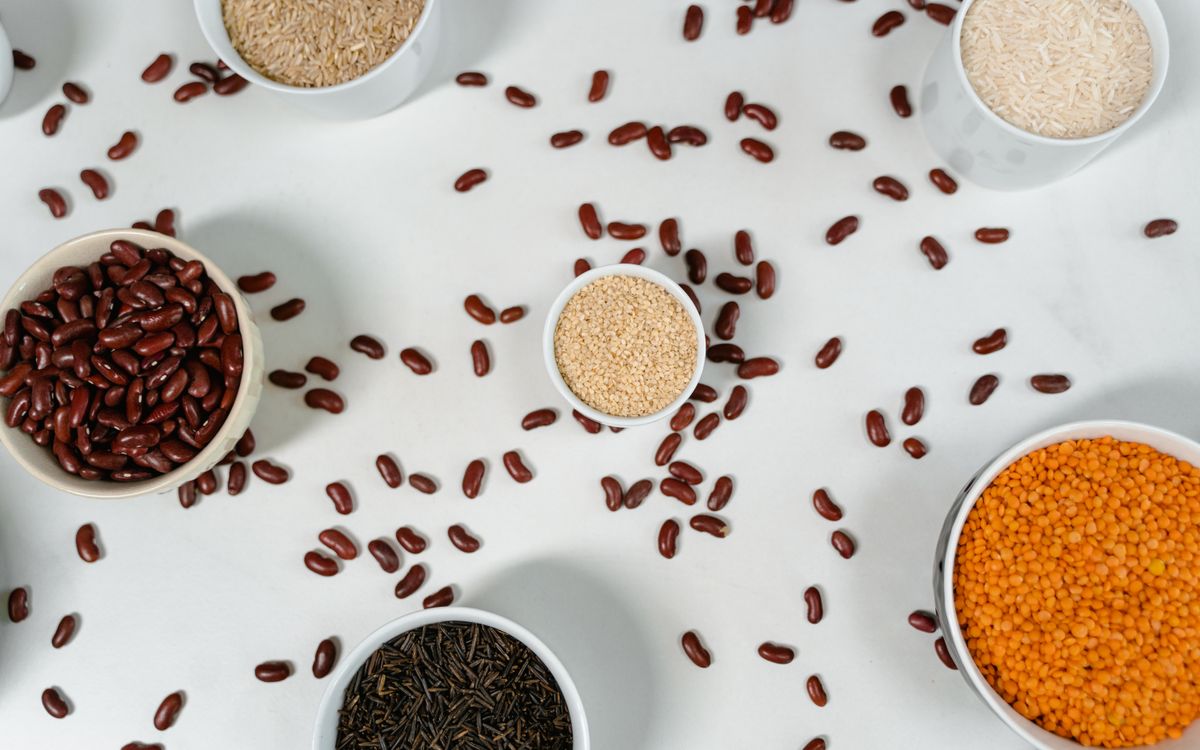
Photo by MART PRODUCTION on Pexels
How to spread it across the day
The research suggests that when you eat protein matters a little, and how you spread it matters more than people expect. Many people eat almost none at breakfast, a little at lunch, and most of the day's protein at dinner. Harvard Health notes research pointing to better use when it is spread across meals instead.
The ISSN's working guidance is about 0.25 grams of high-quality protein per kilogram per meal, or a flat 20 to 40 grams, every three to four hours. For most adults that looks like three meals with a real protein source in each, and perhaps one snack.
What 20 to 30 grams looks like on a plate:
- Three eggs and a slice of cheese
- A cup of Greek yoghurt with a handful of nuts
- A palm-sized chicken breast or piece of fish
- A cup and a half of cooked lentils or beans
- A block of firm tofu about the size of a deck of cards, doubled
- A tin of tuna or sardines
The package matters as much as the grams
Harvard's point about protein is worth repeating: food is never just protein. A steak brings saturated fat; a portion of lentils brings fibre; salmon brings omega-3 fats; processed meat brings salt and preservatives. The research on long-term health tends to favour protein from fish, poultry, beans, lentils, nuts, dairy and soy over red and processed meat. You do not need to be precise about any of this. You need the default choice in each meal to be a good one most of the time.
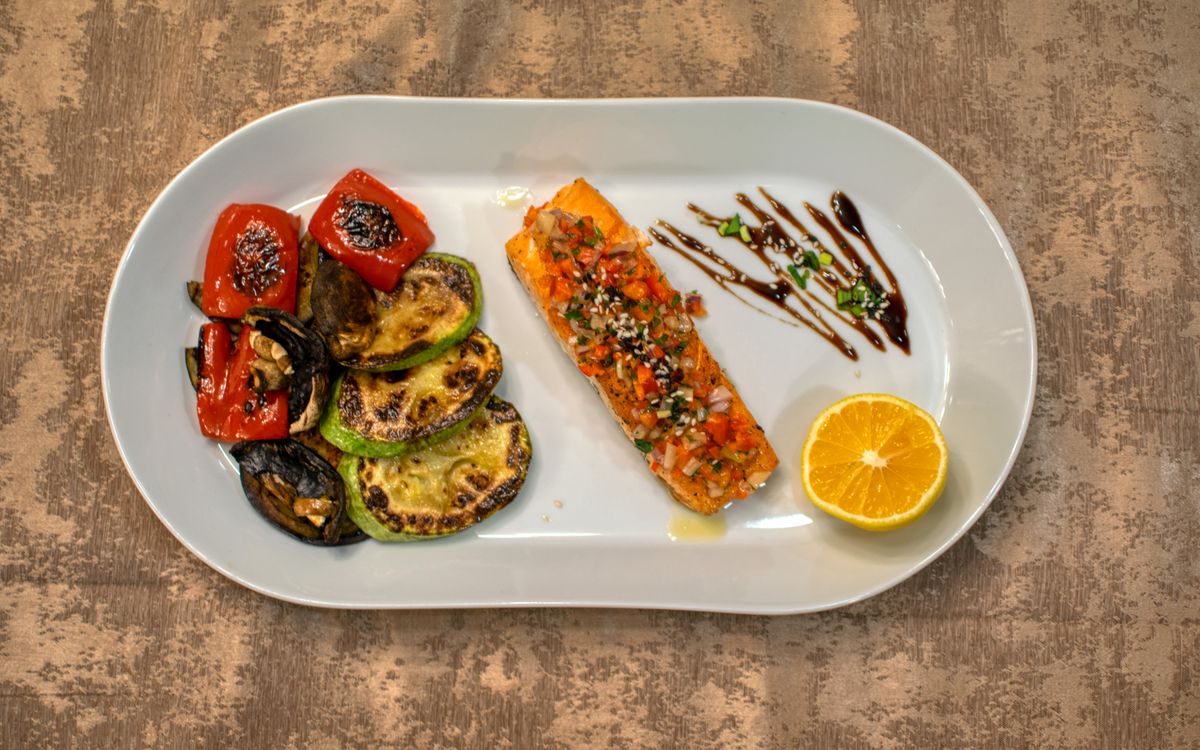
Photo by Cristian Mihaila on Pexels
Do you need protein powder?
No, though it is convenient. The ISSN says plainly that whole foods remain preferable and that supplements are a practical tool for people with high training volumes or busy schedules. A scoop of whey or pea protein is roughly 20 to 25 grams. It is useful after a morning workout when breakfast is an hour away. It is not magic, and nothing in the evidence suggests it does more than the same amount of protein from food.
Can you eat too much?
For healthy adults, intakes up to around 2 grams per kilogram appear well tolerated in the research, and the ISSN's position is that higher intakes in trained people have not shown harm in healthy individuals. The practical costs of very high protein diets are more ordinary: less room on the plate for fibre-rich plants, more money spent on shakes, and less variety. If you have any condition affecting the kidneys, the ceiling is your doctor's call, not an app's.
A simple way to work out yours
- Take your weight in kilograms (pounds divided by 2.2).
- Multiply by 0.8 for the floor, by 1.2 if you are over 60 or move most days, and by 1.6 if you lift weights regularly.
- Divide by three or four. That is roughly what each meal should carry.
A 75-kilogram person who lifts three times a week lands around 120 grams a day, or about 30 grams across four eating moments. That is not a diet. It is eggs at breakfast instead of toast alone, a real portion of something at lunch, and dinner as usual.
Making it a habit, not a calculation
Few people count grams for longer than a fortnight, and they do not need to. What tends to last is a simple check at each meal: is there a real protein source on this plate? Logging that one question is enough to see the pattern. In Orbit, a protein-rich meal is a single tap under Nutrition, and Orion can suggest what to cook from what is already in your fridge, which is usually where a missing protein source gets found.
The short version: 0.8 grams per kilogram is the floor, 1.2 to 2.0 is where active people and older adults tend to land, spread it across the day in portions of 20 to 40 grams, and let food do the work before powder does.
Questions people ask
How much protein do I need a day by weight?
The Recommended Dietary Allowance is 0.8 grams per kilogram of body weight (about 0.36 grams per pound). That is a minimum for healthy adults at rest. Active people are often advised 1.4 to 2.0 grams per kilogram.
How much protein should I eat in one meal?
The International Society of Sports Nutrition suggests about 0.25 grams per kilogram per meal, or 20 to 40 grams, every three to four hours. For most adults that means a real protein source at each of three meals.
Do older adults need more protein?
Many expert groups suggest older adults aim above the RDA, often around 1.0 to 1.2 grams per kilogram, especially when active, because muscle becomes harder to keep with age. Check with your doctor if you have kidney problems.
Is protein powder necessary?
No. Whole foods are the preferred source. Powder is a convenience for people with high training volumes or little time, and a scoop provides roughly 20 to 25 grams.
Can you eat too much protein?
In healthy adults, intakes up to around 2 grams per kilogram appear well tolerated in the research. People with kidney or liver conditions should follow their clinician's target.
Sources
- National Academies. Dietary Reference Intakes for Energy, Carbohydrate, Fiber, Fat, Fatty Acids, Cholesterol, Protein, and Amino Acids, 2005
- Harvard Health Publishing. How much protein do you need every day?
- Jäger R, et al. International Society of Sports Nutrition Position Stand: protein and exercise. Journal of the International Society of Sports Nutrition, 2017
Keep reading

How to keep a gratitude journal, and what the research shows
Studies link a few specific grateful lines a week to a modest lift in mood and well-being. Here is how to write them so the habit lasts.

Does the Pomodoro technique work? What the research says
In one study, students on fixed 24/6 work-break cycles felt less tired and more focused than those who chose their own breaks, and got as much done.

How many steps a day do you really need? Not 10,000
Large studies link the benefit of walking to about 6,000–8,000 steps a day after 60 and 8,000–10,000 before it. Fewer still counts.