How to eat healthy for cheap
How to eat healthy for cheap: build meals from a few staples, buy produce frozen or canned, cook once for several days, and change one habit at a time.


- Buy ingredients, not meals: a dozen staples (oats, rice, beans, lentils, eggs, frozen vegetables, fruit) cover most healthy plates for little.
- Picture the plate first: half vegetables and fruit, a quarter whole grains, a quarter protein, water to drink.
- Frozen and canned produce count toward five a day the same as fresh; 80 g is one portion.
- Cook once for three meals, let beans and eggs carry the protein, and shop from a list once a week.
- Change one habit a week; the version you can keep on a tired day is the one that lowers the bill.
If you want to know how to eat healthy for cheap, the short answer is this: stop buying meals and start buying ingredients. A small set of staples, a plate you can picture, and one cooking session that covers several days will feed you well for less than takeout, delivery, or a cart full of single-serving snacks. The rest of this guide is the routine that makes it stick.
How to eat healthy for cheap: start with the plate, not the price
The cheapest healthy meal is still a meal, so it helps to know what one looks like before you shop. Harvard's Healthy Eating Plate puts it simply: vegetables and fruit on about half the plate, whole grains on a quarter, and protein on the last quarter, with a little healthy oil and water to drink. The NHS says much the same from the other side of the Atlantic: starchy foods such as rice, potatoes, oats and bread should make up just over a third of what you eat, with higher-fibre or wholegrain versions where you can, and at least five portions of fruit and vegetables a day.
That picture is useful because none of its parts is expensive. Oats, rice, lentils, beans, eggs, frozen vegetables, bananas and carrots are some of the lowest-priced items in any supermarket. The expensive version of healthy eating (out-of-season berries, pre-cut salads, protein bars) is a marketing layer on top of a plate that was cheap to begin with.
The staples list
Most cheap, healthy cooking comes down to a dozen items that keep for weeks. Keep these in the house and a meal is always possible:
- Grains: rolled oats, brown or white rice, pasta, a loaf of wholegrain bread (freeze half).
- Protein: dried or canned beans and lentils, eggs, canned fish, peanut butter, and a frozen bag of chicken thighs or a block of tofu when they are on offer. Harvard's plate lists fish, poultry, beans and nuts as the healthy, versatile proteins, and beans are the cheapest of the four by a wide margin.
- Vegetables and fruit: frozen peas, spinach, mixed vegetables and berries; onions, carrots, cabbage, potatoes; bananas and whatever fruit is in season. The NHS counts fresh, frozen and canned produce equally toward your five a day (80 g is a portion), so frozen is not a compromise.
- Flavour: oil, salt, a few spices, garlic, lemons or vinegar, a jar of curry paste or a can of tomatoes.
That is the whole list. With it you can make porridge, rice and beans, lentil soup, egg fried rice, a bean chilli, pasta with tomato and spinach, and a dozen variations on each.

Four habits that cut the bill
Shop from a list, once a week. Most food money leaks through unplanned trips. Decide on three or four dinners for the week, write what they need, and buy only that plus staples that have run out. A list also protects you from the shelf at eye level, where the margin lives.
Cook once, eat three times. A pot of lentil soup or a tray of roasted vegetables and rice costs about the same to make for four portions as for one. Cook on the day you have energy, split it into containers, and the next two days are already handled. If you have wondered whether that is a sensible way to eat, the guide on whether meal prep is good for you covers how long cooked food keeps and how to vary it so you do not get bored.
Let beans and eggs carry the protein. Meat is usually the most expensive thing on the plate. Making it a flavour rather than the centre, or swapping it for lentils, chickpeas or eggs two or three nights a week, lowers the cost of a meal more than any other change. If you are not sure how much protein you actually need, the guide on how much protein you need a day gives the numbers so you can plan without guessing.
Drink water. Harvard's plate says it plainly: drink water, coffee or tea, and skip sugary drinks. Sweet drinks are one of the few grocery items that cost money and add nothing to the meal. The NHS suggests six to eight glasses of fluid a day. Tap water is free.
A week on the cheap, as an example
Here is what a low-cost week can look like when the staples are in the cupboard. Prices vary by country and season, so treat it as a shape rather than a budget:
- Breakfasts: porridge with a banana or frozen berries, or eggs on toast. The NHS lists a breakfast high in fibre and low in sugar, fat and salt as part of a balanced day, and oats fit that description for pennies.
- Lunches: yesterday's dinner, or beans on toast, or a big batch of rice salad with tuna and frozen peas.
- Dinners (three recipes, each made twice): lentil and tomato soup with bread; bean chilli with rice; pasta with garlic, spinach and a fried egg on top.
- Snacks: fruit, peanut butter on toast, carrots, a handful of nuts if they are in budget.
Notice what is not on it: nothing single-serve, nothing pre-cut, no drinks except water, tea and coffee. That is where the savings come from, not from eating less.

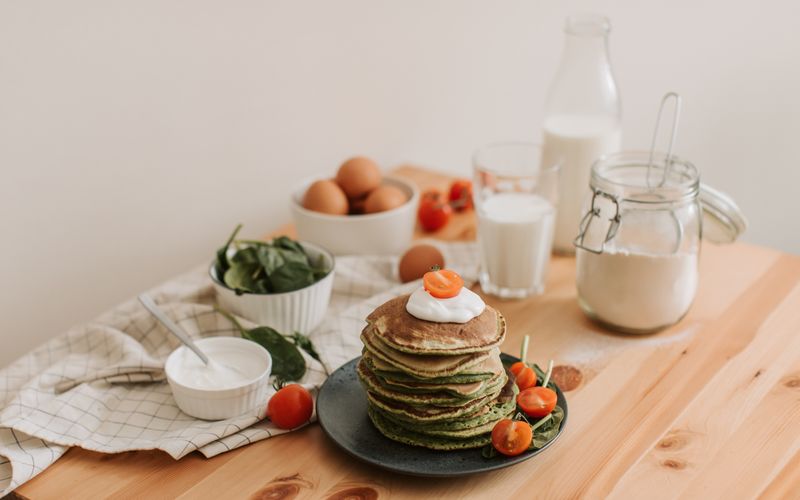
Photo by Th2city Santana on Pexels
What to watch on the label
Cheap does not have to mean processed, but some low-priced foods carry a lot of sugar and salt. The NHS gives two simple cut-offs to read on a packet: more than 22.5 g of total sugars per 100 g means a food is high in sugar, and adults should keep salt to no more than 6 g a day, about a teaspoon. Canned beans and vegetables are fine; rinse them and much of the added salt goes down the sink. Canned fruit in juice rather than syrup is the cheaper and better choice.
Change one thing a week
Trying to overhaul the whole kitchen on a Sunday is how most people end up ordering dinner on Wednesday. A routine that lasts is built one habit at a time: this week, shop from a list. Next week, cook one dinner that covers two nights. The week after, swap one meat dinner for beans. Each step is small enough to keep, and each one lowers the bill a little more. This is the same logic as any habit worth keeping: the version you can do on a tired day is the version that counts, and the guide on what happens when you stay consistent for 30 days explains why the small repeated version beats the heroic one.
If you like having the day's wins written down, Orbit logs a balanced meal, a protein-rich meal or fruit and veg in one tap, so a cheap home-cooked dinner counts toward your day the same as anything else you did for yourself.
Not medical advice
This guide is about shopping and cooking routines, not about treating any condition. If you have a medical reason to eat a particular way, or you are feeding a child or someone with specific dietary needs, a registered dietitian or your doctor is the right person to plan it with.
Questions people ask
What is the cheapest healthy food to live on?
Oats, rice, dried or canned beans and lentils, eggs, frozen vegetables, bananas, carrots and cabbage are among the lowest-priced foods that still cover grains, protein and produce. Built around those, a plate can follow the half-vegetables, quarter-grains, quarter-protein shape without costing much.
Is frozen or canned food as healthy as fresh?
The NHS counts fresh, frozen and canned fruit and vegetables equally toward five a day, with 80 g as one portion. Frozen produce is picked and frozen quickly, and canned is fine if you choose versions without added sugar or salt, or rinse them.
How do I eat healthy for cheap without cooking every day?
Cook once for several days. One pot of soup, chilli or a tray of roasted vegetables and rice makes three or four portions for little more than one, and the leftovers become lunches and the next dinner.
Do I need meat to eat healthy on a budget?
No. Beans, lentils, eggs and canned fish are healthy protein sources and cost much less than meat. Using meat as a flavour rather than the centre of the plate, or skipping it a few nights a week, is one of the biggest single savings.
What is the one habit to start with?
Shop from a list once a week. It cuts the unplanned trips and impulse buys where most food money goes, and it makes every other change easier because the ingredients are already in the house.
Sources
Published by Orbit Editorial. General information, not medical advice. How we write and check guides. Spotted a mistake? Tell us.
Keep reading
How much protein do I need a day? The numbers, plainly
The baseline is 0.8 g per kilogram of body weight a day. Active people and older adults are often advised 1.2 to 2.0 g, spread across meals.

How do I eat less sugar? Start with drinks, then labels
Most added sugar comes from drinks, desserts and sweet snacks. Swap the drinks first, learn one line on the label, and cut back in steps.
Is It Good to Meal Prep? What the Research Says
Meal planning is linked with more varied, higher-quality eating. The catch is safe storage, so plan the back half of the week for the freezer.