
Guides
3 so far, newest first.

❋ Nutrition
Why do I eat when I'm bored? The habit loop explained
Why do I eat when I'm bored? Boredom pushes people to escape monotony, food is the closest change of scene, and repetition turns it into a habit.
❋ Nutrition
How to eat healthy for cheap
How to eat healthy for cheap: build meals from a few staples, buy produce frozen or canned, cook once for several days, and change one habit at a time.
❋ Nutrition
How much protein do I need a day? The numbers, plainly
The baseline is 0.8 g per kilogram of body weight a day. Active people and older adults are often advised 1.2 to 2.0 g, spread across meals.
What the guides say
The short version of each, before you read it.
Why do I eat when I'm bored? The habit loop explained
- Boredom eating is mostly about escaping monotony, not hunger: in one study people ate more M&Ms while watching a clip on repeat.
- Repeated in the same place and time, a bored snack becomes a habit loop: cue, routine, a few minutes of something happening.
- Before eating, ask 'hungry or bored?', drink a glass of water and wait two minutes.
- Swap the routine for something stimulating: a walk, a message, or a more exciting healthy snack, since dull options rarely win.
How to eat healthy for cheap
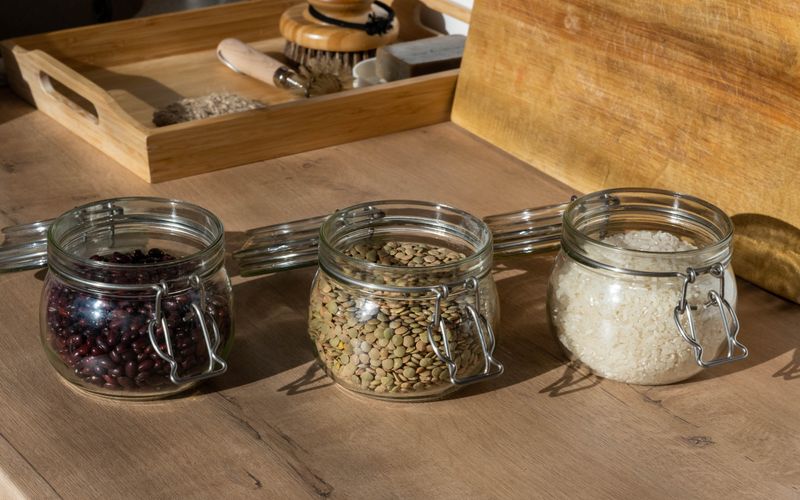
- Buy ingredients, not meals: a dozen staples (oats, rice, beans, lentils, eggs, frozen vegetables, fruit) cover most healthy plates for little.
- Picture the plate first: half vegetables and fruit, a quarter whole grains, a quarter protein, water to drink.
- Frozen and canned produce count toward five a day the same as fresh; 80 g is one portion.
- Cook once for three meals, let beans and eggs carry the protein, and shop from a list once a week.
How much protein do I need a day? The numbers, plainly
- The RDA is 0.8 g of protein per kilogram of body weight a day: a floor for healthy adults at rest, not a target.
- Active people are often advised 1.4 to 2.0 g/kg (ISSN); older adults often aim around 1.0 to 1.2 g/kg.
- Spread it out: roughly 20 to 40 g per meal, every three to four hours.
- Whole foods first. Powder is a convenience, not a requirement.


