How to set goals for 2026: a simple plan that lasts
Pick two or three goals, phrase each as something to do rather than avoid, shrink it to a daily action, and check in every month.


Photo by Leeloo The First on Pexels
- Pick two or three goals for 2026, not ten, and phrase each one as something to do rather than something to stop.
- In a 2020 study of 1,000+ adults, 58.9% with approach goals felt successful, versus 47.1% with avoidance goals.
- In a 2002 study, 46% of resolvers were still succeeding at six months, compared with 4% of people who did not resolve.
- Make each goal checkable with a yes or no, shrink it to a small daily action, and decide now what you will do after a missed day.
- Check in once a month, ideally with one other person, and resize the goal if it is too easy or too hard.
If you're wondering how to set goals for 2026, the short answer is: fewer than you think, phrased as something to move toward, and broken down until each one is a small thing you can do on an ordinary day. Then check in once a month. The research on goal setting and New Year's resolutions points the same way. Specific goals tend to beat vague ones, goals about doing something tend to beat goals about stopping something, and people who make a clear resolution at all do much better than people who just hope to change "sometime".
This guide walks through a plan you can finish in one sitting, before the new year, and actually use in February.
Why setting goals for the new year is worth it
It's easy to be cynical about resolutions. But the evidence is kinder than the jokes. In a 2002 study in the Journal of Clinical Psychology, John Norcross and colleagues followed 159 people who made New Year's resolutions and 123 people who wanted to make the same kinds of changes but didn't set a resolution. Six months later, 46% of the resolvers were still continuously succeeding, compared with 4% of the people who hadn't resolved anything.
That's not proof that a date on the calendar does the work. But it does suggest that deciding on a clear change, at a clear starting point, is a real advantage. The people who did well also tended to go in feeling ready and able to change, and once January came, they leaned on practical tactics rather than just thinking about the problem.
Step 1: Look back at 2025 before you look forward
Spend ten minutes with three questions:
- What gave me energy this year?
- What drained it?
- What did I keep meaning to do and never started?
Write short answers. You're looking for patterns, not a full review. If walks with a friend always lifted your week, that's a clue. If late nights scrolling kept wrecking the next morning, that's a clue too. Good goals for 2026 usually come straight out of these answers.

Photo by KATRIN BOLOVTSOVA on Pexels
Step 2: Pick two or three goals, not ten
Every goal competes for the same limited time and attention. A list of ten tends to become a list of zero by March. Choose two or three areas that matter most, for example sleep, movement and reading, and leave the rest for later in the year.
If you're stuck choosing, ask which change would make the others easier. Better sleep often makes focus, food choices and exercise feel lighter, so it's a common first pick.
Step 3: Phrase each goal as something to do, not something to stop
This is one of the clearest findings in recent resolution research. In a 2020 study in PLOS ONE, Martin Oscarsson and colleagues followed more than 1,000 adults through a year of New Year's resolutions. People whose goals were approach-oriented (aiming to start or add something) were more likely to call themselves successful than people with avoidance-oriented goals (aiming to quit or cut something): 58.9% compared with 47.1%. Overall, about 55% of the people who answered at the end of the year said they had kept their resolution going.
So instead of "stop staying up late", try "be in bed by 11 on weeknights". Instead of "stop wasting time on my phone", try "read for 20 minutes after dinner". Same direction, but now there's an action to take.
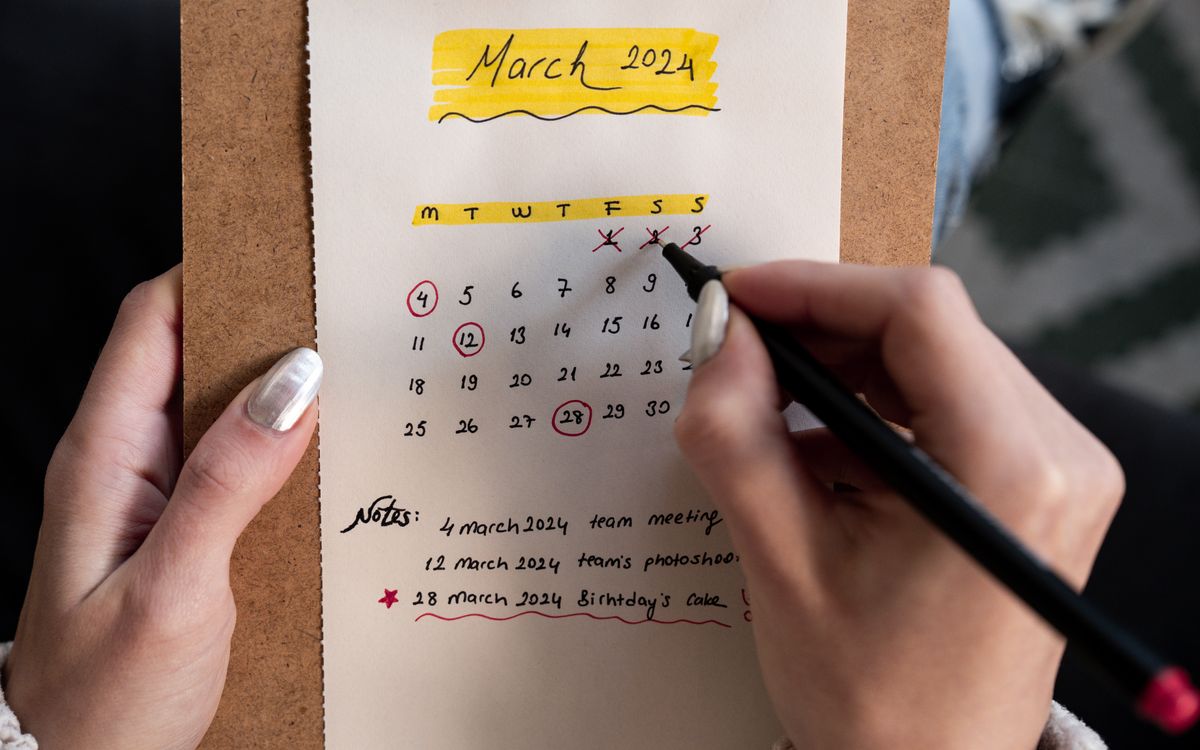
Step 4: Make each goal specific enough to check
Edwin Locke and Gary Latham spent 35 years studying goal setting, and their 2002 review in American Psychologist sums up a long run of studies in which specific, challenging goals led to better performance than being told to "do your best". A vague goal has no finish line, so you never quite know whether today counted.
A quick test: at the end of any day, could you answer yes or no to "did I do it?" If not, it isn't specific yet.
- Vague: "Get fit in 2026."
- Specific: "Walk 7,000 steps on at least five days a week."
- Vague: "Read more."
- Specific: "Read 15 pages before bed."
Step 5: Shrink it to a daily or weekly action
A year is too far away to steer by. Turn each goal into the smallest action that still points in the right direction, sized for a busy, tired day. If you do more on a good day, great. The goal is the floor, not the ceiling.
It helps to attach the action to something you already do: after I pour my morning coffee, I'll write one line in my journal. After I brush my teeth at night, I'll put my phone on the charger outside the bedroom. Habits take weeks to settle, often longer than people expect, so a small action you repeat beats a big one you abandon. How long it takes to build a habit covers what the research says about that timeline.
Step 6: Plan for the week it goes wrong
It will. A cold, a deadline or a trip will break the streak at some point. Decide now what you'll do when that happens: "If I miss two days, I'll do the smallest version on the third." Writing an if-then plan like this ahead of time turns a slip into a step in the plan instead of a reason to quit.
If you've ever set goals and found yourself unable to even start, why can't I set goals goes deeper on the usual reasons and the if-then method.
Step 7: Check in once a month
Put a 15-minute check-in on your calendar for the first Sunday of each month. Ask:
- What did I actually do this month?
- Is the goal still the right size, too easy or too hard?
- What one change would make next month easier?
In the Oscarsson study, people in the group that got some support, a named person to share the goal with and regular check-ins, did best of the three groups. You don't need a formal program to copy that. A friend you message once a month works.
In Orbit, you can set a target per pillar in your own units and the ring fills as you go, so half a day's goal still shows as half instead of a miss.
A sample set of goals for 2026
Here's what a finished plan might look like:
- Sleep: be in bed by 11 on weeknights. Smallest version: phone on the charger by 10:45.
- Movement: a 20-minute walk five days a week. Smallest version: ten minutes around the block.
- Reading: 15 pages a night. Smallest version: one page.
Three goals, each phrased as something to do, each checkable in a second, each with a version small enough for a bad day.
If January is already behind you
You don't have to wait for a date to start. If your goals faded early, why New Year's resolutions fail by February explains the usual pattern, and any Monday or first of the month is a fine restart. If what's in the way is a low mood that has lasted weeks, rather than a planning problem, talking to a doctor or a mental health professional is a good first step.
The short answer
To set goals for 2026, look back at what helped and hurt this year, pick two or three areas, phrase each goal as something to do, make it specific enough to check, shrink it to a small daily action, plan for missed days, and check in monthly. The research suggests that clear, positive, specific goals with some support tend to last longer than big vague ones.
Questions people ask
How many goals should I set for 2026?
Two or three is a good number. Each goal competes for the same time and attention, and a long list tends to fade by spring.
Do New Year's resolutions actually work?
In one study, 46% of people who made a resolution were still succeeding six months later, compared with 4% of similar people who did not make one.
What is the difference between an approach goal and an avoidance goal?
An approach goal is about starting or adding something, like reading nightly. An avoidance goal is about stopping something. In a 2020 study, approach goals were more often kept.
When should I start setting goals for next year?
Any time in November or December works. Planning ahead gives you a few weeks to shrink each goal into a daily action before January 1.
What if I miss a few days?
Decide ahead of time on a restart rule, such as doing the smallest version of the goal on the third day. A missed day is part of the plan, not the end of it.
Sources
- Oscarsson, Carlbring, Andersson & Rozental (2020). A large-scale experiment on New Year's resolutions: Approach-oriented goals are more successful than avoidance-oriented goals. PLOS ONE
- Norcross, Mrykalo & Blagys (2002). Auld lang syne: success predictors, change processes, and self-reported outcomes of New Year's resolvers and nonresolvers. Journal of Clinical Psychology
- Locke & Latham (2002). Building a practically useful theory of goal setting and task motivation: a 35-year odyssey. American Psychologist
Published by Orbit Editorial. General information, not medical advice. How we write and check guides. Spotted a mistake? Tell us.
Keep reading

Why do New Year's resolutions fail by February?
Resolutions tend to fail on vague plans, all-or-nothing rules and goals framed as things to avoid. Here is what research suggests works instead.

Why can't I set goals? Five reasons, and what helps
Goal-setting usually stalls because goals are vague, too big, or have no plan attached. Research points to small, specific targets with an if-then plan.

How long does it take to build a habit? Not 21 days
The 21-day figure is a myth. In the best-known study habits took a median of 66 days, ranged from 18 to 254, and one missed day made no difference.